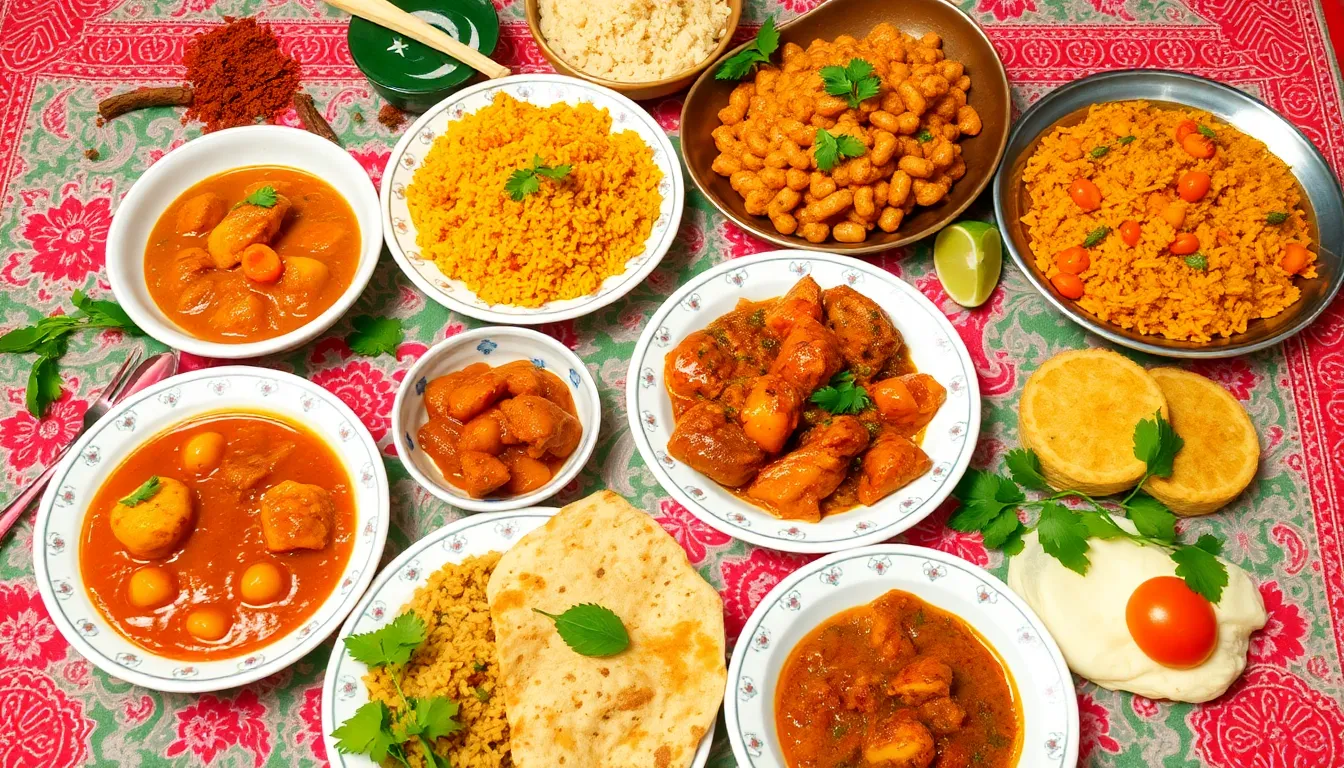
When it comes to food, Pakistan is a culinary treasure trove that could make even the most seasoned foodies weak in the knees. Imagine a world where spices dance on your taste buds, and every meal tells a story steeped in tradition. From the sizzling street carts of Karachi to the aromatic kitchens of Lahore, Pakistani food culture is a vibrant tapestry woven with flavors, colors, and aromas that beckon you to indulge.
Pakistani Food Culture
Pakistani food culture showcases an extensive variety of flavors and regional specialties. Each dish reflects the rich history and diversity of the country, influenced by indigenous traditions and various cultural interactions. Spices form the backbone of Pakistani cuisine, with prominent use of ingredients like cumin, coriander, and turmeric. Aromatic herbs such as mint and cilantro enhance the dishes further.
Meals often incorporate quality proteins, with chicken, beef, and lentils being staples. Street food also holds a significant place, featuring items like biryani, kebabs, and chaat. Karachi’s street carts brim with these enticing offerings, attracting locals and tourists alike. Lahore’s vibrant food scene boasts renowned dishes such as nihari and halwa, drawing food enthusiasts from across the globe.
Family gatherings frequently center around food, showcasing the communal aspect of Pakistani culture. Sharing meals beams with warmth and hospitality, reflecting the importance of togetherness. Festivals provide another opportunity for culinary expression, with dishes like sheer khurma during Eid and special biryanis during weddings.
Regional variations enrich the culinary landscape. The flavors of Punjabi cuisine lean towards the spicy and robust, while Sindhi dishes often exhibit a tangy profile. In contrast, Balochi food tends to focus on simpler, earthy tastes, emphasizing the natural flavors of ingredients.
Culinary traditions continue to evolve while respecting historical roots. Contemporary chefs blend traditional recipes with modern techniques, producing innovative dishes. This fusion fascinates food lovers eager to experience both authenticity and creativity in their dining experiences.
Regional Cuisines
Pakistani regional cuisines offer a vibrant tapestry of flavors and culinary traditions, deeply rooted in the distinct cultures of the country’s provinces. Each region boasts its own specialties and signature dishes that reflect local ingredients and cooking techniques.
Punjab
Punjab’s cuisine shines with its bold flavors and extensive use of spices. Popular dishes include butter chicken and sarson da saag served with makki di roti, showcasing rich, hearty meals. The region thrives on its diverse array of lentil dishes and biryanis, prepared with layers of fragrant rice and spiced meats. Street food stalls in cities like Lahore present mouthwatering kebabs and parathas, attracting food enthusiasts for their exciting street-side meals.
Sindh
Sindh offers a tangy and flavorful culinary experience, with dishes characterized by the use of tamarind and spices. Sindhi biryani stands out with its unique preparation methods, blending meat with fragrant rice and spices. Another staple, Sindhi karhi, delivers a delightful mix of flavors with its hearty vegetable stew. Street vendors serve tempting snacks like dahi puri and samosas, providing a taste of the region’s beloved cuisine.
Khyber Pakhtunkhwa
Khyber Pakhtunkhwa cuisine emphasizes robust flavors and hearty ingredients. Chapli kebab remains a favorite, known for its rich, spiced meat and crispy texture. Additionally, the region features delicious rice dishes, such as Peshawari pulao, often accompanied by tender meats. The culinary scene embraces traditional cooking styles, showcasing dishes cooked over open flames, which enhances their deep flavors and communal atmosphere.
Balochistan
Balochistan’s food culture reveals simplicity and earthiness in its flavors. The emphasis on grilling reveals an affinity for meat-based dishes, with sajji as a standout dish, showcasing marinated whole lamb. Guests enjoy traditional bread, such as roti or khoBak, paired with savory stews. Additionally, the use of local herbs and spices elevates the region’s culinary profile, creating hearty meals that nourish both family and friendship.
Influences on Pakistani Food
Pakistani food is a tapestry woven with historical, cultural, and geographic influences that shape its unique flavors and aromas.
Historical Influences
Historical events significantly impacted Pakistani cuisine. The Mughal Empire introduced rich, aromatic dishes, emphasizing spices and elaborate cooking techniques. Persian culinary practices blended with local traditions, resulting in delicate flavors, especially in biryanis and kebabs. Trade routes facilitated the introduction of ingredients like saffron and dried fruits, enhancing various dishes. The influence of British colonialism led to a fusion of Western and South Asian flavors, evident in dishes like karahi and the popular use of sauces. Each layer of history adds depth to the dining experience, making it a reflection of the country’s diverse past.
Culinary Techniques
Culinary techniques in Pakistan reflect regional diversity and traditional practices. Grilling is central to preparing kebabs, with many chefs using charcoal to enhance flavors. Slow cooking, often used for biryanis and curries, allows spices to meld and intensify. Techniques such as tandoor-baking give naan and seekh kebabs their distinctive textures. Steaming retains nutrients in vegetables, empowering health-conscious choices. Street vendors expertly employ simple methods to create popular snacks, like samosas and chaat, highlighting quick, flavorful meals. Each technique contributes to preserving tradition while allowing innovation within Pakistani cuisine.
Traditional Dishes
Pakistan’s traditional dishes embody the country’s rich cultural heritage, offering a variety of flavors that capture the essence of its culinary landscape.
Appetizers
Pakistani appetizers deliver bold flavors, often served during family gatherings or festivities. Samosas feature a crispy exterior stuffed with spiced potatoes or meat, creating a satisfying bite. Another popular item, samusa chaat, combines samosas with tangy yogurt and chutneys for a delightful mix. Pakoras, fritters made from vegetables or meat, provide a warm, crunchy treat. Served with mint or tamarind chutney, each appetizer complements the rich tapestry of Pakistani cuisine.
Main Courses
Main courses showcase the heart of Pakistani food, characterized by diverse regional specialties. Biryani stands out as a beloved dish, offering layers of fragrant rice, marinated meat, and an array of spices. Nihari, a slow-cooked beef stew, boasts a rich gravy and tender meat that delights the senses. Karahi, prepared in a wok-like pot, combines meat with various spices and tomatoes, emphasizing a robust seafood flavor. Each meal typically includes naan or rice, providing a perfect accompaniment to the bold flavors of the main courses.
Desserts
Desserts in Pakistan highlight the sweetness of cultural traditions, offering a range of indulgent options. Gulab jamun, small dough balls soaked in sugar syrup, offers a syrupy sweetness that delights. Barfi, a fudge-like treat made from condensed milk and nuts, comes in various flavors, appealing to different palates. Jalebi, a coil-shaped sweet deep-fried and soaked in syrup, provides a crispy and sugary experience. Each dessert marks significant occasions, embodying the sweetness and warmth of Pakistan’s culinary heritage.
Food and Social Customs
Pakistani food culture thrives on social interactions, with family gatherings and festivals playing pivotal roles.
Family Gatherings
Families bond over shared meals, fostering connections through Pakistani cuisine. Dining together often features dishes like biryani, nihari, and kebabs, showcasing regional specialties. Samosas and pakoras serve as popular appetizers, adding excitement to the meal. Traditionally, meals commence with the recitation of gratitude, highlighting respect for food. Everyone enjoys the communal experience, where conversation flows freely over plates filled with flavorful dishes. Serving others reflects hospitality, a core value in Pakistani culture. Special occasions and even everyday meals emphasize the importance of unity and togetherness during dining.
Festivals and Celebrations
Festivals uphold food traditions, displaying the vibrant nature of Pakistani culture. Eid celebrations exemplify this, marked by elaborate feasts featuring dishes like biryani and sheer khurma. Families gather to prepare meals, with everyone participating in the cooking process. Special sweets, such as gulab jamun and barfi, add joy to the festivities. During weddings, guests indulge in a variety of dishes, showcasing the culinary diversity across regions. Street vendors also contribute, offering popular snacks like chaat. The energy during these occasions resonates with communal spirit, deepening personal connections while celebrating heritage through food.
Conclusion
Exploring Pakistani food culture reveals a vibrant tapestry of flavors and traditions. Each dish tells a story rooted in history and community, inviting food lovers to experience its rich diversity. The blend of spices and regional specialties showcases not only culinary expertise but also the warmth of familial bonds and cultural celebrations.
As Pakistani cuisine continues to evolve, it maintains its authenticity while embracing innovation. This dynamic nature ensures that whether through traditional recipes or modern interpretations, the heart of Pakistani food culture remains ever inviting. It’s a journey worth taking for anyone eager to savor the essence of Pakistan.