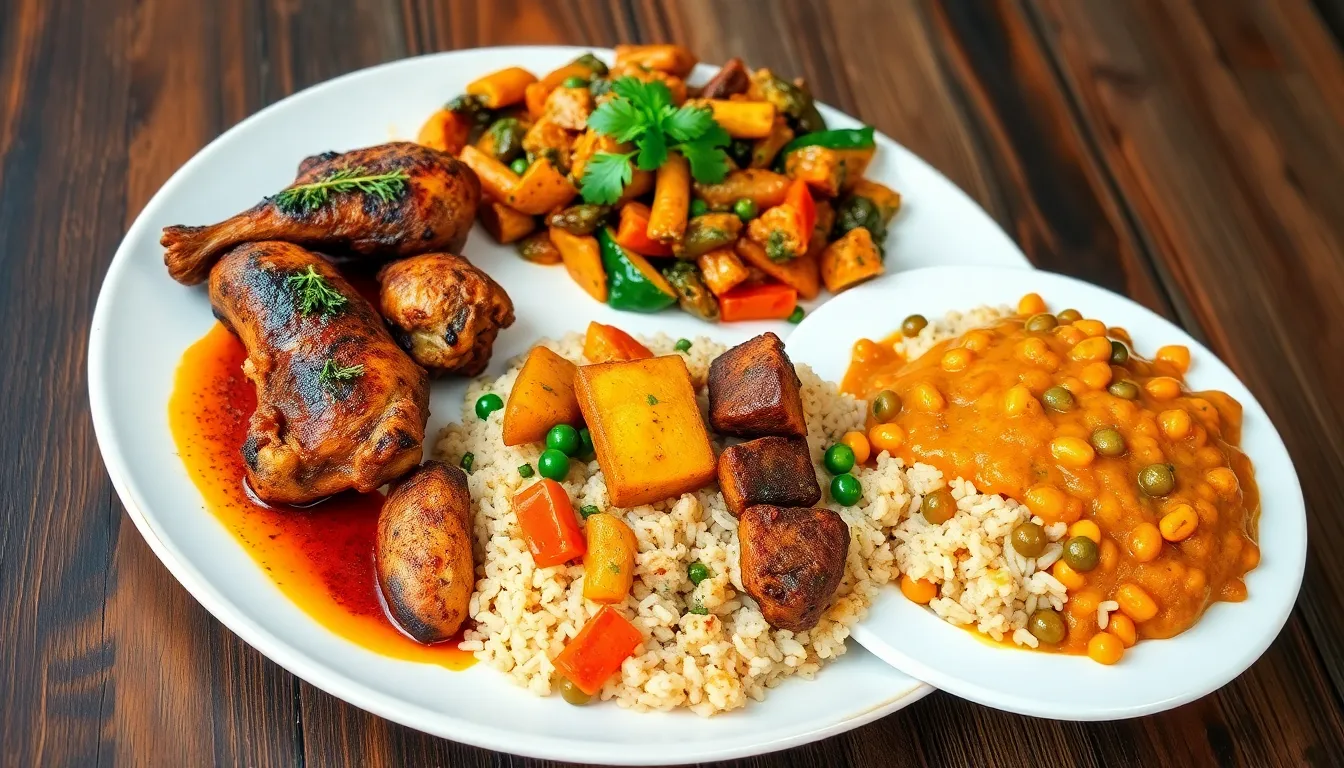
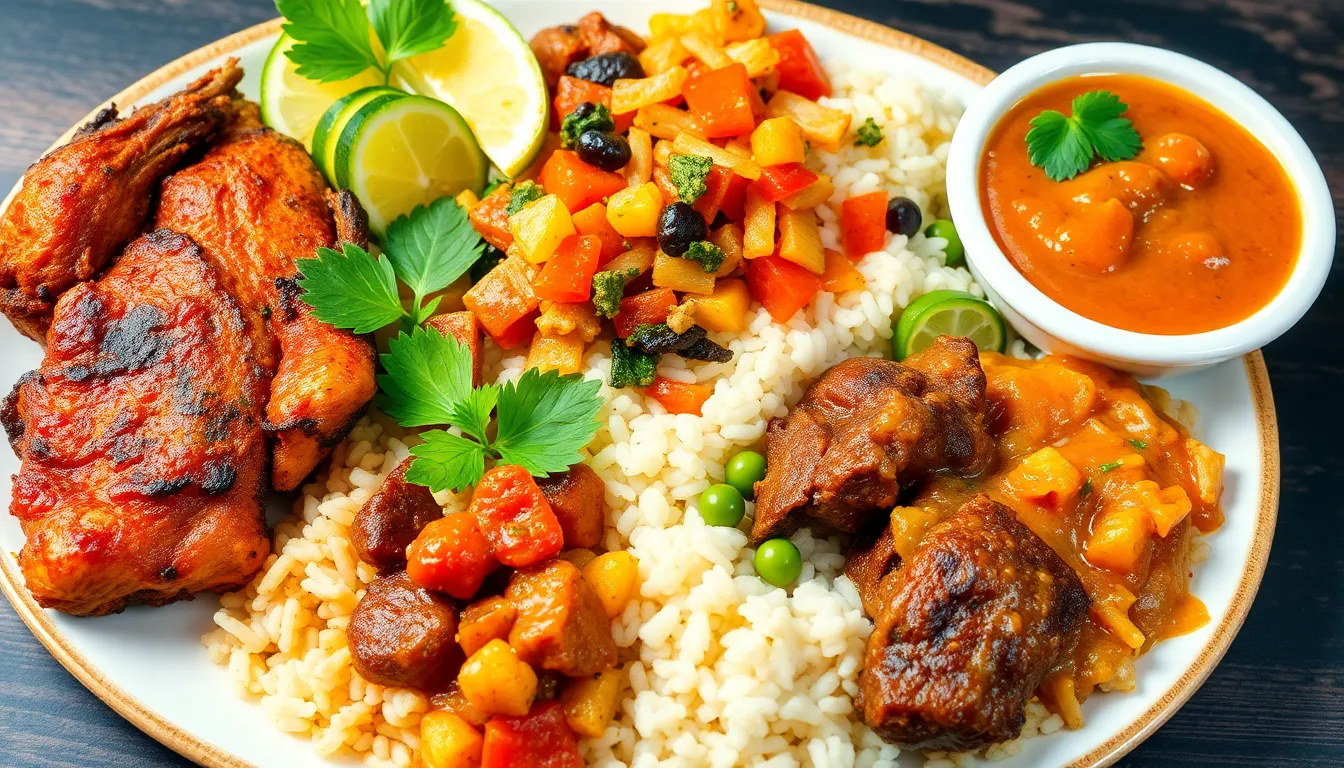
In the vibrant heart of the Caribbean lies Jamaica, a paradise that’s not just famous for its stunning beaches and reggae rhythms but also for its mouthwatering cuisine. Picture this: jerk chicken sizzling on the grill, the aroma wafting through the air, tempting taste buds from miles away. Jamaican food isn’t just a meal; it’s a celebration of culture, history, and a dash of spice that’ll make anyone’s taste buds dance.
Jamaica Culture Food
Jamaican culture food represents a fusion of diverse influences, including African, European, and indigenous Taíno elements. Flavorful spices and herbs are essential components, creating distinctive dishes that carry deep cultural significance. Jerk seasoning stands out, characterized by a blend of allspice, thyme, and scotch bonnet peppers.
The traditional meal of ackee and saltfish is noteworthy, combining salted cod with the native ackee fruit, a symbol of Jamaica’s culinary identity. Rice and peas serve as a common side dish, typically made with pigeon peas or kidney beans, highlighting the island’s agricultural resources.
Seafood plays a vital role, particularly dishes like steamed fish and festival, a sweet fried dumpling that complements many meals. Popular street foods, such as patties filled with spiced meat or vegetables, showcase the bold flavors that define street-side dining.
Curry goat, influenced by Indian culinary traditions, features tender goat meat stewed with vibrant spices, appealing to many tastes. Festivals and family gatherings often spotlight dishes like oxtail, slow-cooked in a rich gravy, providing a comforting eating experience.
Vegetarian options exist, with callaloo often featured alongside various starches like yam, plantain, and dumplings. Jamaica’s love for food extends to unique beverages, including sorrel and ginger beer, frequently served during celebrations. Each dish, rich in flavor and history, reflects the vibrant spirit of Jamaica’s culture.
Traditional Jamaican Dishes
Jamaican cuisine features a variety of traditional dishes that highlight the island’s rich culinary heritage.
Jerk Chicken
Jerk chicken stands out as one of the most iconic Jamaican dishes. This flavorful meal combines marinated chicken with a spicy jerk seasoning, typically featuring allspice, thyme, and scotch bonnet peppers. Grilling the chicken over pimento wood infuses a smoky flavor unmatched by other cooking methods. Served with rice and peas, jerk chicken represents a staple at barbecues and parties. The dish’s roots trace back to the island’s Maroon communities, who perfected the technique of seasoning and cooking meat outdoors.
Ackee and Saltfish
Ackee and saltfish comprises Jamaica’s national dish, symbolizing the island’s unique culinary identity. This dish features salted cod cooked with the native ackee fruit, which has a creamy texture and mild flavor. Often accompanied by sautéed vegetables like onions, tomatoes, and peppers, ackee and saltfish creates a vibrant, colorful meal. Considered a breakfast favorite, it reflects Jamaica’s agricultural produce and coastal fishing industry. Many locals enjoy this dish with fried dumplings or boiled green bananas, enhancing the dining experience with complementary flavors.
Curry Goat
Curry goat showcases the influence of Indian cuisine on Jamaican food culture. This dish features tender goat meat, marinated with a blend of spices such as curry powder, ginger, and garlic. Slow cooking allows the meat to absorb the rich flavors, resulting in a savory and aromatic meal. Traditionally served with rice and peas or roti, curry goat holds a special place at family gatherings and festive occasions. The dish highlights Jamaica’s diverse culinary influences while retaining its unique character, appealing to spice enthusiasts throughout the island.
Popular Jamaican Ingredients
Jamaican cuisine shines through its unique and vibrant ingredients. Essential components highlight the island’s rich heritage and diverse culinary influences.
Pimento
Pimento, known as allspice, holds a special place in Jamaican cooking. The flavor profile combines hints of cinnamon, nutmeg, and cloves, offering a warm and aromatic essence. Found in jerk seasoning, pimento enhances dishes like grilled meats and stews. Significant for both flavor and fragrance, pimento also showcases Jamaica’s agricultural resources. Its versatility extends beyond seasoning; it can be used whole or ground for varying intensity levels in recipes.
Scotch Bonnet Peppers
Scotch bonnet peppers are integral to Jamaican dishes, providing an intense heat and fruity flavor. Known for their bright colors and distinct shape, these peppers elevate recipes such as jerk chicken and peppered shrimp. In addition to their heat, these peppers contribute complexity to sauces and marinades. Typically found in many local markets, they add an authentic flair to home-cooked meals. For those seeking a flavorful kick, scotch bonnet peppers remain a quintessential element of Jamaican cuisine.
Callaloo
Callaloo serves as a popular leafy green in Jamaica, often compared to spinach. This nutritious vegetable cooks quickly and complements various dishes. Frequently sautéed with onions, garlic, and tomatoes, callaloo creates a harmonious side dish. It also features prominently in soups and traditional breakfasts, highlighting its versatility. Rich in vitamins, callaloo symbolizes the island’s agricultural bounty and focuses on healthy eating in Jamaican households. Its vibrant green color adds visual appeal to meals, making it a staple of local cuisine.
Influence of Jamaican Culture on Food
Jamaican cuisine reflects a rich tapestry of cultural influences. Various elements contribute to the unique flavors and dishes found on the island.
African Roots
African traditions heavily influence Jamaican food. Flavors and cooking techniques from West Africa shape many dishes. Ingredients like okra, yam, and plantain are staples in both cuisines. Cooking methods such as stewing and frying also find their origins in African practices. The use of spices and robust flavors showcases this deep-seated culinary heritage. Recipes passed down through generations maintain a strong connection to African roots.
Caribbean Flavors
Caribbean spices elevate Jamaican cuisine, combining various culinary practices. The island’s geographic location allows for an array of local ingredients. Tropical fruits and fresh seafood play vital roles in many traditional dishes. Influential cultures across the Caribbean introduce unique spices into Jamaican kitchens. Pimento, thyme, and scotch bonnet peppers are commonly used to enhance flavors. The infusion of diverse cooking styles creates a vibrant food landscape. Street vendors often offer condensed versions of these Caribbean flavors in accessible formats.