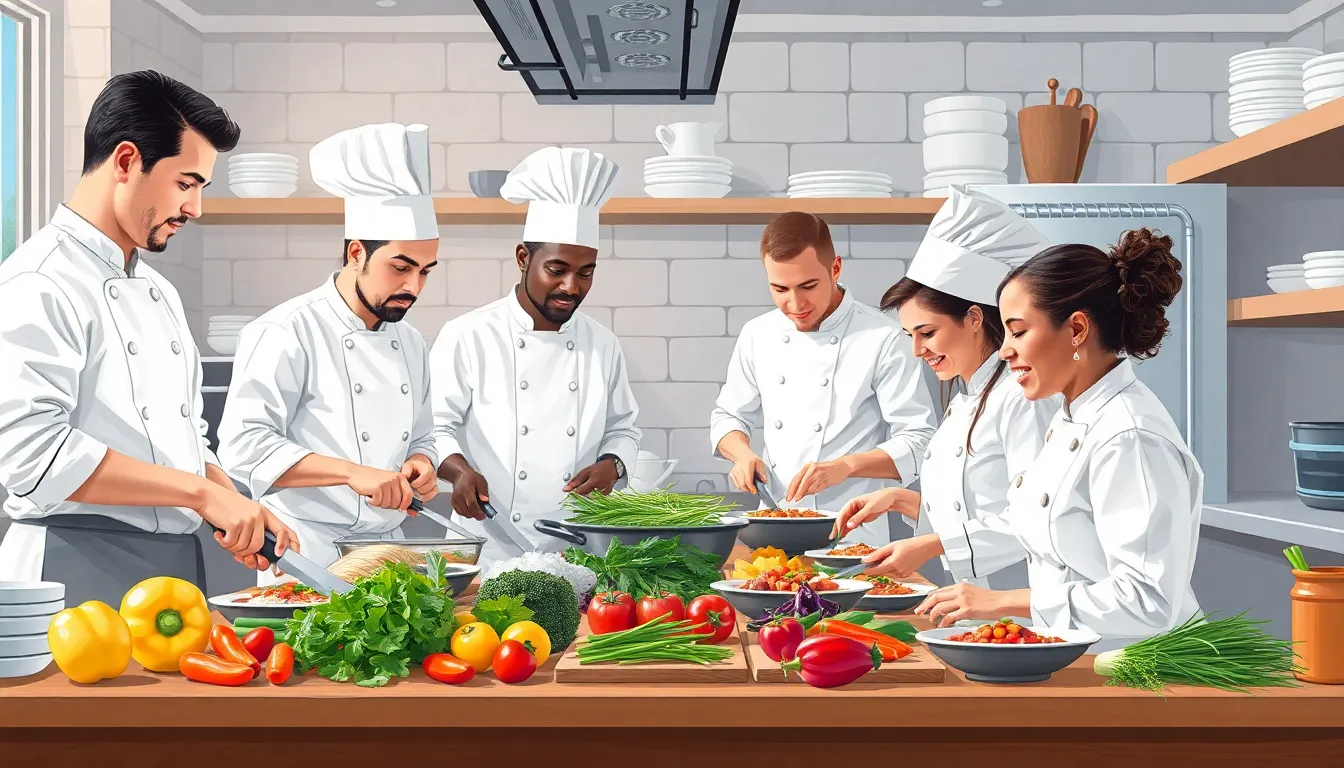
Culinary arts isn’t just about tossing ingredients into a pot and hoping for the best. It’s a delicious blend of science, creativity, and a dash of flair that transforms ordinary meals into extraordinary experiences. Imagine whipping up a dish that not only satisfies hunger but also tantalizes taste buds and sparks joy. That’s the magic of culinary arts.
Culinary Arts Meaning
Culinary arts encompass a wide range of skills and knowledge related to cooking and food preparation. This discipline extends beyond basic cooking techniques, incorporating elements of creativity, presentation, and flavor combinations.
Definition of Culinary Arts
Culinary arts refer to the practice and art of preparing, cooking, and presenting food. It includes techniques in baking, cooking, and food presentation, emphasizing aesthetics and tastes. Chefs and culinary professionals utilize their training to innovate and refine dishes. These skills involve understanding ingredients, cooking methods, and balancing flavors. Culinary arts also embrace various cuisines and cultural practices, highlighting the global influence on food preparation.
Importance in Modern Society
Culinary arts play a crucial role in contemporary culture and society. They contribute to health, nutrition, and enjoyment of food. A well-prepared meal can create connections among people and enhance social experiences. Furthermore, culinary arts support the economy through restaurants, catering, and food-related businesses. The profession promotes sustainability, as chefs aim to use local and organic ingredients. Culinary education fosters talent and encourages innovation, ensuring the continuation of culinary traditions while adapting to current trends.
Historical Context of Culinary Arts
Culinary arts has a rich and varied history, shaped by cultural evolution and societal needs.
Evolution Through the Ages
Culinary practices date back thousands of years, with ancient civilizations establishing foundational cooking techniques. Early humans discovered fire, which transformed food preparation, leading to advancements in flavor and safety. Over time, diverse cultures refined these techniques, emphasizing regional ingredients and cooking styles. The Middle Ages saw the emergence of cooks in Europe, where culinary guilds began to form, promoting professional standards. The Renaissance introduced a focus on presentation and flavor, pushing culinary boundaries further. In the 19th century, culinary arts recognized chefs as crucial artisans, expanding their roles in society and establishing the traditional kitchen brigade system.
Cultural Influences on Culinary Arts
Cultural exchanges significantly impacted the evolution of culinary arts. Trade routes facilitated the sharing of spices, cooking methods, and ingredients across continents. For instance, the Silk Road connected Asia and Europe, introducing dishes such as pasta and various sauces. The colonization of new territories brought indigenous ingredients into European cuisines, creating fusion dishes worldwide. Modern globalization enables chefs to blend techniques and flavors from different cultures, showcasing the culinary arts’ adaptability. Local ingredients still play a role, with farm-to-table movements highlighting regional cuisines, fostering a deeper appreciation for food’s cultural significance.
Components of Culinary Arts
Culinary arts comprise various interrelated skills, techniques, and cooking styles. Each element contributes to the overall mastery of food preparation and presentation.
Skills and Techniques
Essential skills in culinary arts include knife skills, flavor pairing, and food safety knowledge. Knife skills allow chefs to chop, slice, and dice ingredients efficiently. Understanding flavor pairing facilitates the creation of balanced dishes that excite the palate. Culinary techniques span a wide range, including baking, roasting, grilling, and sautéing. Mastery of these skills ensures consistency and quality in food preparation. Additionally, plating techniques enhance the visual appeal of dishes, making the dining experience more enjoyable.
Cooking Styles and Methods
Diverse cooking styles reflect cultural influences and personal creativity. Traditional styles like French, Italian, and Thai showcase regional flavors and techniques. Modern practices incorporate elements such as molecular gastronomy or fusion cuisine, which blend different culinary traditions. Common methods used in culinary arts include steaming, poaching, and pan-searing, each imparting unique textures and flavors to food. By exploring various cooking styles and methods, chefs develop signature dishes that captivate diners and elevate their culinary expertise.
Educational Pathways in Culinary Arts
Culinary arts education offers numerous pathways for aspiring chefs. Programs typically range from diplomas to bachelor’s and associate degrees. Notable culinary schools like the Culinary Institute of America and Le Cordon Bleu provide hands-on training in various cooking techniques and cuisines. Students often engage in both practical skill development and theoretical coursework, ensuring a well-rounded culinary education. Many institutions also offer online courses, catering to individuals seeking flexibility in their studies.
Culinary Schools and Programs
Culinary schools provide structured environments for developing essential cooking skills. Various programs focus on specific cuisines, techniques and presentation styles. Attendees learn everything from basic cooking methods to advanced culinary science. Programs often include internships at restaurants, giving students real-world experience and valuable industry connections. Graduates typically emerge equipped to enter competitive job markets.
Certifications and Specializations
Certification enhances culinary credentials for professionals looking to advance. Specialized certifications may focus on areas like pastry, nutrition or food safety. Organizations such as the American Culinary Federation offer certification programs that validate expertise and skills. Pursuing these certifications can differentiate candidates in the job market, showcasing commitment to the culinary field. Many chefs opt to specialize in particular cuisines, enhancing their marketability and tailoring their career paths.
Conclusion
Culinary arts represent a vibrant blend of creativity and skill that transcends basic cooking. This discipline not only nurtures the palate but also celebrates the cultural significance of food. As culinary professionals continue to innovate and adapt, they play a vital role in shaping dining experiences that resonate with people on multiple levels.
The journey through culinary arts is both an art and a science that fosters community, health, and sustainability. With a rich history and an ever-evolving landscape, culinary arts remain essential in connecting individuals with their food and each other. Embracing this field opens doors to endless possibilities for those passionate about the culinary world.