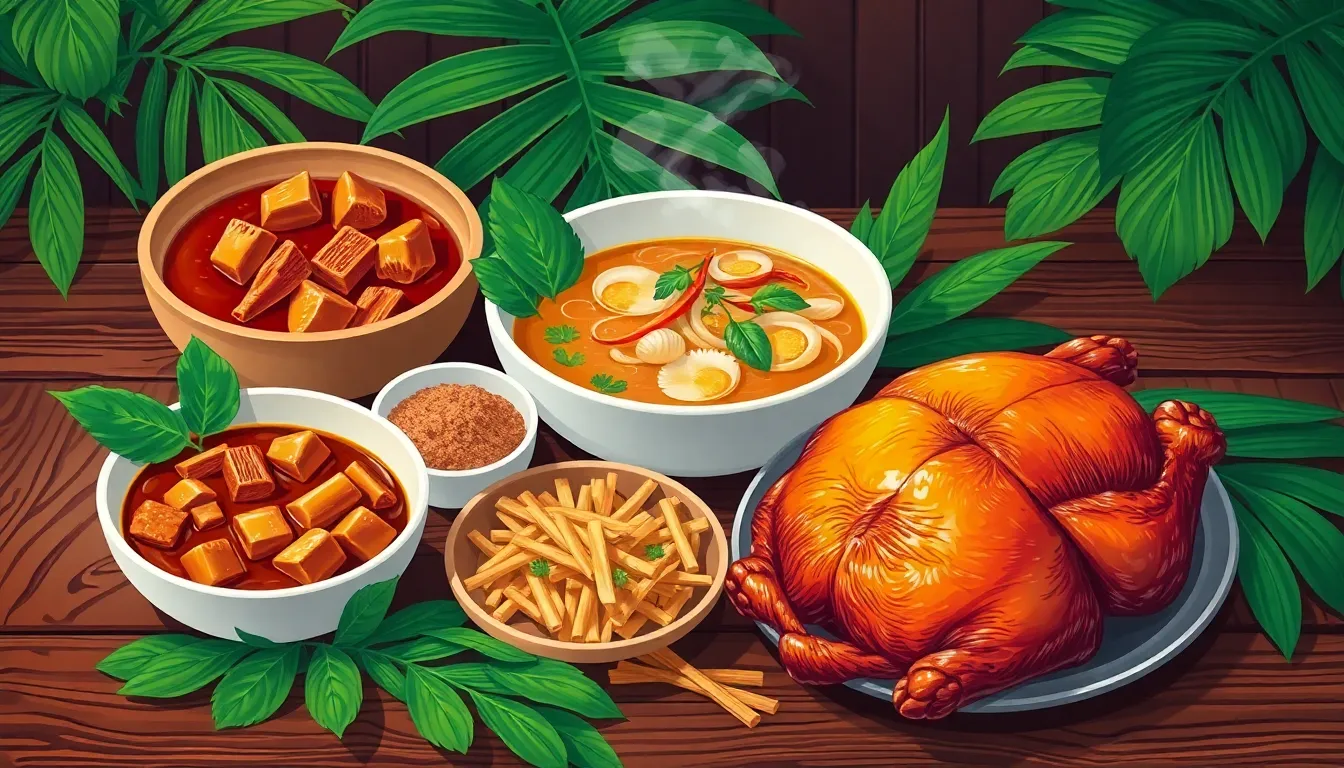
Filipino cuisine is a delightful rollercoaster ride for the taste buds, blending flavors and traditions that’ll make anyone’s mouth water. From the savory explosion of adobo to the sweet, creamy goodness of leche flan, each dish tells a story that’s as rich as the ingredients themselves. Imagine a feast where every bite is a celebration of culture, history, and a sprinkle of love—and maybe a dash of humor too.
Filipino Culture Food
Filipino cuisine exhibits a rich tapestry of flavors influenced by various cultures. Spanish, Chinese, and American culinary traditions significantly shape its unique character. Traditional ingredients include rice, seafood, vegetables, and a variety of meats, reflecting the geography and resources of the Philippines.
Adobo stands as a quintessential dish, made with meat, soy sauce, vinegar, and spices. This flavorful preparation epitomizes the balance of savory and tangy in Filipino food. Sinigang, a sour soup, features tamarind and a medley of vegetables, showcasing the indigenous palate. Another staple, lumpia, includes fresh or fried spring rolls filled with meat and vegetables, loved across generations.
Common cooking techniques include braising, steaming, and frying. Each method contributes distinct textures and depth to the dishes. Street food forms an integral part of Filipino culture, with options like barbecue skewers and fried snacks readily available. Festivals often feature local delicacies, inviting a communal dining experience that strengthens bonds within communities.
Dining customs emphasize sharing. Family-style meals encourage togetherness and foster a sense of belonging. It’s customary to use hands for certain foods in informal settings, embodying the warmth of Filipino hospitality.
Desserts, such as bibingka and halo-halo, offer sweet ends to meals. Bibingka, a rice cake, often appears during holidays, while halo-halo combines shaved ice with fruits and sweet beans, making it a refreshing choice in warm climates.
Overall, Filipino culture food reflects its history and people’s resilience, with each dish telling a story of tradition, celebration, and unity.
Traditional Filipino Dishes
Traditional Filipino dishes showcase a variety of flavors and ingredients, bringing cultural heritage to every meal. Each dish offers a unique taste experience that embodies the Philippines’ rich culinary tradition.
Adobo
Adobo stands as one of the most iconic Filipino dishes, characterized by its savory and tangy flavor. This dish typically features marinated meat, commonly chicken or pork, simmered in a mixture of soy sauce, vinegar, garlic, and spices. The slow cooking process enhances its rich flavors, making it a favorite in many households. Varieties of adobo exist, with some regions adding ingredients like coconut milk or potatoes for added depth. Families often enjoy adobo with steaming white rice, creating a comforting and wholesome meal.
Sinigang
Sinigang is a beloved sour soup that captivates taste buds with its unique flavor profile. Tamarind serves as the primary souring agent, providing a refreshing tang that complements the dish’s ingredients. Usually made with pork, shrimp, or fish, sinigang includes an assortment of vegetables such as radish, eggplant, and long green beans. The delightful contrast of flavors makes it a staple during cooler weather. Served hot, sinigang delivers warmth and comfort, symbolizing home for many Filipinos.
Lechon
Lechon, known as roast pig, stands out as a centerpiece at festive gatherings and celebrations. The whole pig is marinated, often with a blend of spices, and slowly roasted over an open flame, resulting in crispy skin and tender meat. This dish embodies a celebratory spirit, frequently featured at birthdays, weddings, and holidays. Many regions across the Philippines pride themselves on their unique lechon recipes, with Cebu’s version being particularly famous. Accompanying sauces typically enhance the flavor, providing an irresistible burst of taste with every bite.
Regional Variations of Filipino Food
Filipino cuisine varies significantly across the archipelago, showcasing regional ingredients and cultural influences.
Luzon
Luzon is home to a diverse array of flavors. Classic dishes such as Kare-Kare feature oxtail cooked in a rich peanut sauce, often paired with bagoong. Ilocano cuisine introduces unique items like Pinakbet, a vegetable medley with fermented shrimp paste. The region also prides itself on its street food, with options like fish balls and Isaw, grilled chicken intestines. Festivals celebrate local foods such as the Pahiyas Festival, where colorful rice displays showcase local produce and creativity.
Visayas
Visayan dishes reflect the region’s coastal heritage. Seafood options dominate menus, with favorites like Inasal na Manok, a grilled chicken marinated in vinegar and calamansi. Sinigang na Baboy, a sour pork soup, is widely enjoyed, epitomizing the region’s penchant for bold flavors. Biko, a sweet rice cake made from glutinous rice and coconut milk, often appears at celebrations. The annual Ati-Atihan Festival highlights Visayan culture through food, music, and vibrant costumes, reinforcing community ties through shared culinary traditions.
Mindanao
Mindanao boasts rich culinary diversity influenced by various cultures. Dishes like Rendang, a spicy beef stew, reflect the region’s connections with Indonesian flavors. Satti, skewered meat served with a spicy sauce, stands as a popular street food choice. The use of fresh local ingredients, including coconut and various spices, enhances Mindanao cuisine. Festivals such as the Kadayawan Festival celebrate the abundance of local produce, uniting communities through food, tradition, and cultural pride.
Influences on Filipino Cuisine
Filipino cuisine showcases a rich blend of various cultural influences that shape its unique identity. Spanish, Chinese, and American culinary practices play significant roles in defining the flavors and cooking techniques found in the Philippines.
Spanish Colonization
Spanish colonization left a lasting mark on Filipino food culture. Ingredients like garlic, onions, and tomatoes became staples in everyday cooking. Cooking methods such as frying and stewing were integrated into numerous Filipino dishes. Celebrations feature specialties like lechon and paella, symbolizing the fusion of local and Spanish cuisine. The process of marinating meats in vinegar and soy sauce reflects Spanish influences on traditional dishes like adobo.
Chinese Influence
Chinese immigrants introduced a variety of flavors and cooking practices to the Philippines. Noodles and rice dishes gained popularity, leading to the creation of local favorites like pancit. The use of soy sauce and dumplings also echo this influence. Street food culture flourished thanks to the introduction of favorites like siopao and lumpia. These culinary adaptations became essential parts of Filipino gatherings and daily meals.
American Impact
American influence reshaped Filipino cuisine in the 20th century. Fast food became a staple in urban areas, incorporating a fusion of Western and Filipino flavors. Iconic dishes like burger steak and spaghetti with sweet sauce emerged from this cultural exchange. The enjoyment of coffee transformed, leading to a thriving café culture that embraces both local and international beverages. Culinary practices adapted to include a mix of quick and familiar meals, catering to contemporary lifestyles.
Contemporary Trends in Filipino Food
Contemporary Filipino food trends reflect a blend of tradition and innovation. Influential chefs experiment with traditional ingredients while incorporating modern techniques. Fusion cuisine has gained popularity, combining Filipino flavors with global influences, like tacos filled with adobo or sushi using lumpia.
Health-conscious options are emerging within the culinary landscape. Many restaurants now prioritize using organic, locally sourced ingredients. Plant-based versions of traditional dishes, such as vegan sinigang or vegetable lumpia, attract those looking for healthier alternatives.
Social media significantly impacts food culture. Platforms like Instagram showcase visually appealing dishes, making food photography an art form. Viral food trends, such as cheese pulls from baked cheese sticks or colorful halo-halo, drive interest in traditional offerings.
Food festivals increasingly celebrate diverse Filipino cuisine. Events featuring street food vendors and local artisans promote unique regional specialties. These gatherings foster community ties while introducing new audiences to Filipino flavors.
Transnational migration boosts the popularity of Filipino cuisine worldwide. Filipino restaurants flourish in cities across the globe, serving classic dishes alongside contemporary interpretations. Menu offerings often include traditional favorites like lechon or sweet spaghetti, catering to Filipino expatriates craving a taste of home.
Sustainability practices become integral to many dining establishments. Local restaurants commit to reducing food waste by offering seasonal menus. Farm-to-table concepts promote a direct connection between consumers and producers, highlighting the importance of fresh ingredients.
This dynamic fusion of tradition with contemporary influences showcases the resilience and adaptability of Filipino cuisine. Chefs and food enthusiasts continue to explore ways to honor their heritage while embracing a modern culinary landscape.
Conclusion
Filipino cuisine stands as a testament to the rich cultural tapestry of the Philippines. Its diverse flavors and culinary traditions reflect a history shaped by various influences while celebrating local ingredients and community bonds. Each dish not only tells a story but also invites diners to partake in a shared experience that fosters connection and togetherness.
As modern trends continue to evolve, Filipino food remains rooted in its heritage while embracing innovation. The growing interest in sustainable practices and health-conscious options showcases the adaptability of this vibrant cuisine. Whether through traditional recipes or contemporary interpretations, Filipino food continues to captivate and unite people around the world.