Picture this: you’re lounging on a sun-soaked beach in the Bahamas, the sound of waves crashing in the background, and the tantalizing aroma of fresh conch fritters wafting through the air. Bahamian cuisine isn’t just food; it’s a vibrant celebration of culture, history, and a sprinkle of island magic. From savory seafood dishes to mouthwatering tropical fruits, every bite tells a story that’ll make your taste buds dance.
Bahamas Culture Food
Bahamian cuisine showcases a vibrant blend of ingredients and traditions that reflect the islands’ diverse history. Fresh seafood plays a central role, with conch, crab, and fish being staples in many dishes. Savory conch fritters demonstrate this importance; they combine conch meat with spices and deep-fry for a crunchy treat.
Tropical fruits also enhance the culinary landscape. Pineapples, mangoes, and guavas thrive in the Bahamian climate, offering natural sweetness and flavors that complement savory dishes. Rum, a favorite drink derived from sugarcane, adds a unique twist to both beverages and desserts.
Bahamian cooking involves various techniques, such as boiling, grilling, and frying, contributing to the rich flavor profiles. Ceviche, for instance, highlights the freshness of fish, marinated in lime juice, providing an exciting experience for the palate.
Spicy elements often find their way into meals as well, with seasonings like thyme, pepper, and garlic enhancing the taste of traditional dishes. Souse, a popular chicken or pork stew, embodies this use of spices, resulting in a flavorful broth.
Cultural influences are evident throughout the local cuisine. African, Caribbean, and European traditions intertwine, creating a unique culinary identity. Dishes like peas and rice reflect this melding of cultures while celebrating Bahamian heritage.
Island gatherings frequently showcase food as a centerpiece, emphasizing the community spirit. Festivals centered around food, such as Junkanoo, highlight traditional recipes and foster a sense of togetherness among locals and visitors alike.
Traditional Dishes
Bahamian traditional dishes reflect the islands’ vibrant culture and history through fresh ingredients and unique flavors. Food plays a crucial role in community gatherings and celebrations.
Conch Salad
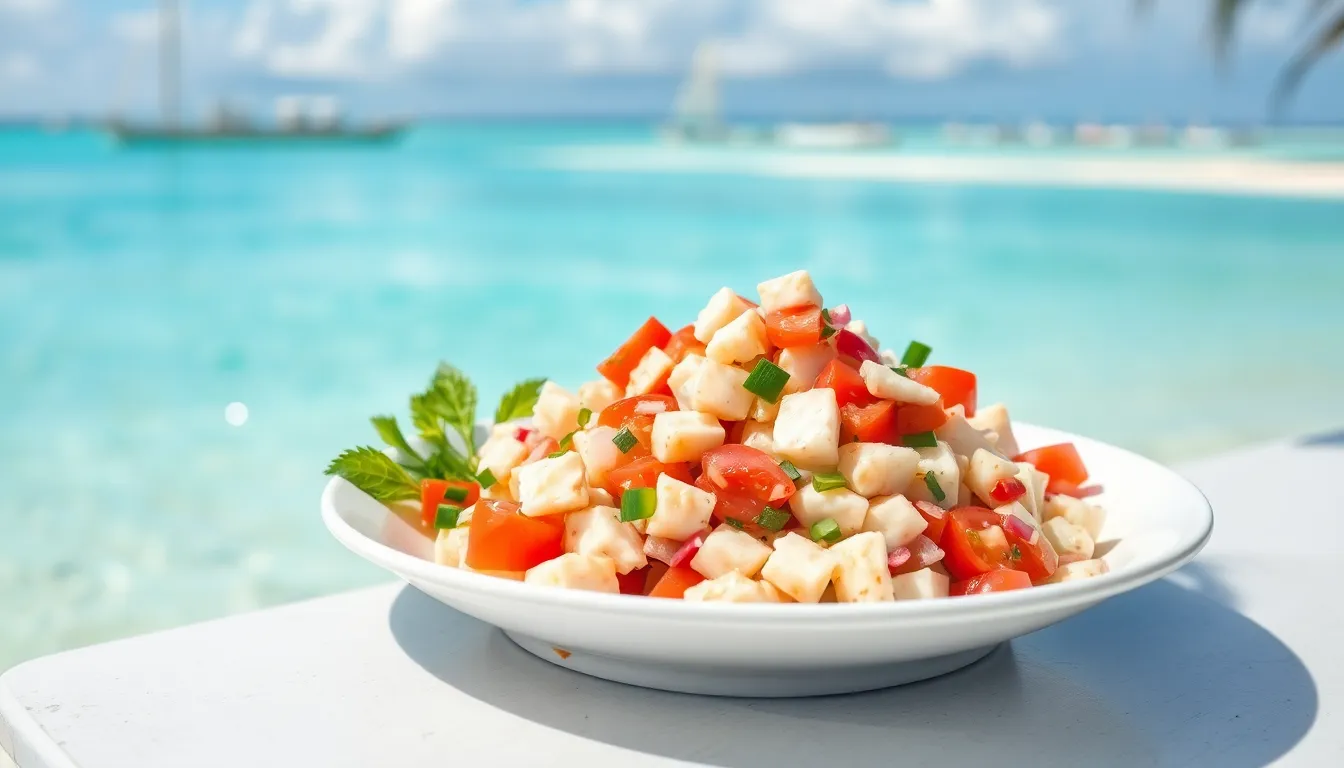
Conch salad stands as a staple in Bahamian cuisine. Fresh conch gets diced and mixed with tomatoes, onions, and peppers, delivering a refreshing taste. Lime juice enhances the dish, adding a zesty kick. Served cold, this vibrant salad embodies the essence of the islands. Popular at beach gatherings, conch salad showcases the importance of local seafood. Meals often feature this dish alongside various servings of hot sauce. Its simplicity and freshness make conch salad a favorite among locals and tourists alike.
Rock Lobsters
Rock lobsters, known locally as crawfish, are a true delicacy in the Bahamas. Grilled or steamed with garlic butter, they highlight the islands’ commitment to fresh seafood. Paired with rice and peas, rock lobsters make an exquisite meal. Locals often enjoy them during special occasions or family gatherings. Shacks along the coast serve this popular dish, emphasizing the connection between food and community. Distributed throughout restaurants and beachside vendors, rock lobsters showcase the islands’ rich marine life.
Bahama Mama
Bahama Mama serves as a quintessential tropical cocktail enjoyed in the islands. The cocktail combines rum, coconut rum, and orange juice, often topped with grenadine for a vibrant color. Served over ice, it embodies the spirit of relaxation and sunshine. Bartenders across the Bahamas craft this drink with a personal touch, ensuring a unique experience. Perfect for sipping while watching the sunset, Bahama Mama complements the culinary culture. The cocktail invites island visitors to indulge in the flavor of the tropics.
Influences on Bahamas Cuisine
Bahamian cuisine reflects a rich tapestry of cultural influences. Each element contributes to the flavorful identity of the islands.
African Heritage
African heritage plays a significant role in shaping Bahamian food. Traditional cooking methods and ingredients trace back to various African cultures. Staples such as okra and peas are commonly used in local dishes. The communal aspect of meal preparation emphasizes togetherness, mirroring an African culinary tradition. Recipes for souse highlight the connection to African roots through flavorful meats and spices. Deep frying methods for conch fritters also showcase African influence, emphasizing techniques passed through generations.
European Colonization
European colonization introduced new ingredients and cooking styles to Bahamian cuisine. The arrival of Europeans brought items like spices, citrus fruits, and bread. Traditional dishes evolved by incorporating these new ingredients, creating a unique blend. For instance, the use of rum in cooking and cocktails stems from colonial influences. Lobster dishes, often grilled or baked, became more popular due to European culinary impacts. This fusion defined island dishes, resulting in a culinary identity that proudly reflects its historical context.
Caribbean Flavor Profiles
Caribbean flavors contribute to the dynamic nature of Bahamian cuisine. The islands share a bounty of spices, herbs, and ingredients with nearby Caribbean nations. Ingredients like scotch bonnet peppers provide heat, complementing many recipes. Tropical fruits enhance both savory and sweet dishes, creating vibrant flavor combinations. Local festivals often highlight these flavors, showcasing how they bring communities together. One can find regional variations of traditional recipes, reflecting the broader Caribbean culinary landscape, while retaining Bahamian authenticity.
Modern Interpretations
Bahamian cuisine continues to evolve, incorporating global influences while honoring traditional flavors. Chefs creatively blend local ingredients with international culinary techniques.
Fusion Cuisine
Popular in the Bahamas, fusion cuisine reflects a dynamic culinary landscape. Restaurants frequently combine Caribbean spices with Asian flavors, creating dishes like conch curry. Tacos filled with grilled fish and sliced tropical fruits show how Bahamian food adapts to modern palates. Some establishments experiment with plant-based options, bringing a fresh twist to traditional recipes. This inventive approach attracts both locals and tourists, showcasing the islands’ culinary versatility.
Healthier Options
Health-conscious diners find several options within Bahamian cuisine. Grilled fish dishes, rich in omega-3 fatty acids, provide a flavorful alternative to fried options. Salads incorporating vibrant tropical fruits enhance meals while delivering essential nutrients. Quinoa and brown rice are increasingly featured in place of white rice, supporting healthier eating habits. Many menus highlight fruits and vegetables, emphasizing fresh and nutritious choices for all guests.
Food Festivals and Events
Bahamian food festivals showcase the islands’ vibrant culinary heritage. Each event treats attendees to an array of traditional dishes that honor local flavors and ingredients. The Junkanoo Festival, celebrated during the Christmas season, features colorful parades, lively music, and delicious local cuisine. Visitors enjoy conch fritters, Bahama Mama cocktails, and fresh seafood while participating in this festive gathering.
The Pineapple Festival, held annually in Eleuthera, highlights the tropical fruit’s significance in Bahamian culture. Local chefs present unique pineapple-infused dishes, engaging guests with tastings and cooking demonstrations. Attendees discover creative uses for this beloved ingredient, enhancing their culinary experiences.
Another popular event is the Abaco Music Festival. This festival fuses musical performance with gastronomic delights. Local restaurants set up booths to serve traditional dishes alongside vibrant musical acts, creating a lively atmosphere. Rock lobster grilled to perfection becomes a favorite among festival-goers.
In more remote areas, small community celebrations often revolve around family and friends sharing dishes prepared from cherished recipes. These intimate gatherings serve as platforms for passing down culinary traditions and foster a sense of unity among participants.
Culinary competitions also play a massive role in Bahamian festivals. Chefs showcase their skills, creating dishes that highlight local ingredients and influence. Judges sample entries, celebrating creativity, flavor, and presentation. Events like these inspire future chefs to innovate while honoring their heritage.
Bahamian food festivals not only deliver exceptional culinary experiences but also strengthen community ties. Each event reflects the islands’ rich cultural tapestry and invites both locals and visitors to partake in the diverse flavors that define Bahamian cuisine.
Conclusion
Bahamian cuisine is a vibrant tapestry woven from history culture and community. Each dish tells a story that connects locals and visitors alike to the islands’ rich heritage. The flavors of fresh seafood tropical fruits and aromatic spices create an unforgettable culinary experience that reflects the warmth of Bahamian hospitality.
Food festivals serve as a celebration of this unique culture bringing people together to share in the joy of traditional recipes and innovative dishes. As Bahamian cuisine continues to evolve it remains a vital part of the islands’ identity inviting everyone to explore its delicious offerings. Whether it’s enjoying conch fritters on a sunny beach or sipping a Bahama Mama at a local festival the essence of the Bahamas is truly found in its food.