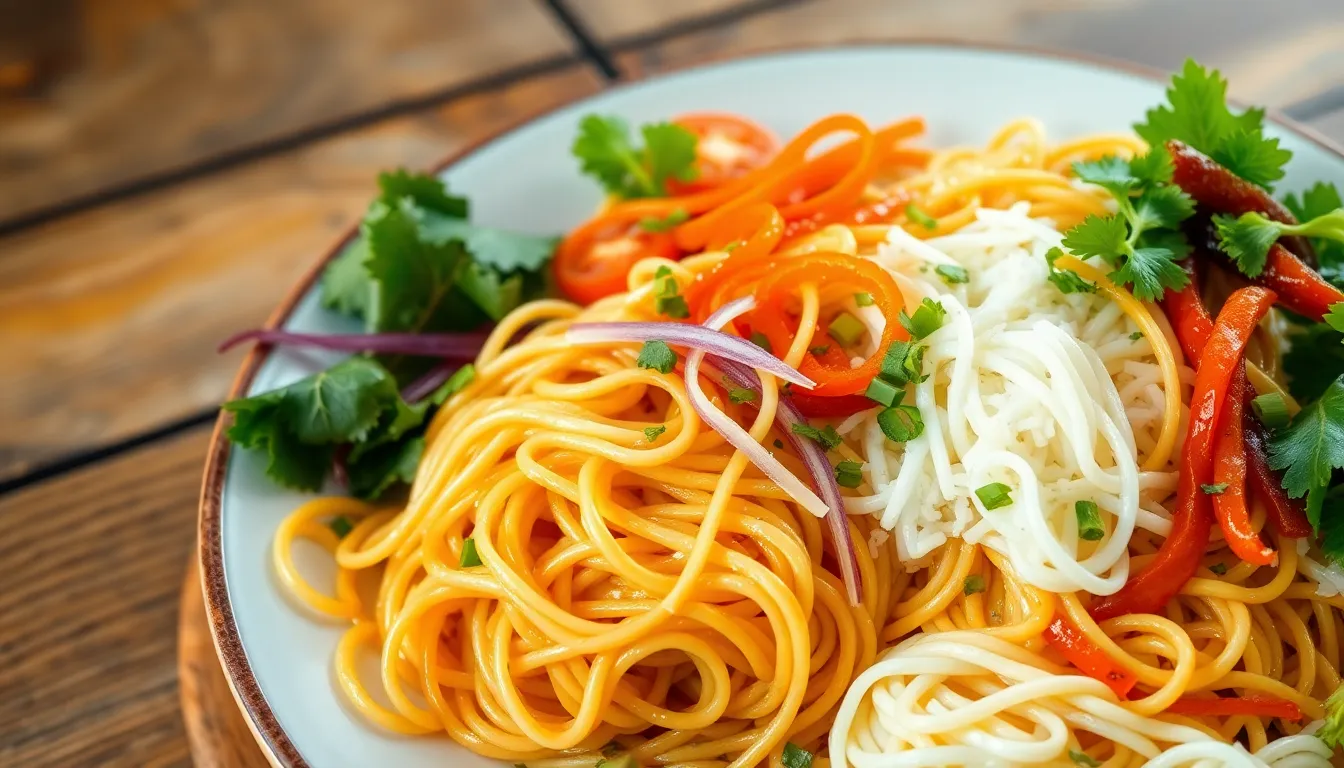
Noodles: the beloved comfort food that can turn a frown upside down faster than you can say “pasta la vista, baby!” But before diving into that steaming bowl of deliciousness, it’s time to unravel the mystery behind their nutrition facts. Are they the guilty pleasure we love or a sneaky source of energy?
Noodles Nutrition Facts
Noodles serve as a versatile base in many dishes, offering varying nutritional profiles depending on the type. Common varieties include wheat noodles, rice noodles, and egg noodles. Each has distinct nutrient contents to consider.
Nutritionally, cooked wheat noodles typically provide around 221 calories per 100 grams. This variety contains approximately 2.5 grams of fat, 7.5 grams of protein, and about 43 grams of carbohydrates. They also offer minimal fiber, averaging about 2 grams, which affects digestion and satiety.
Rice noodles appear lighter, delivering around 109 calories per 100 grams when cooked. They contain roughly 0.2 grams of fat and 2 grams of protein but yield around 25 grams of carbohydrates per serving. Their fiber content is low, often below 1 gram.
Egg noodles differ significantly, offering approximately 138 calories for every 100 grams cooked. With 4.4 grams of fat and 5.6 grams of protein, they provide a higher protein source compared to wheat and rice noodles. Carbohydrate content is about 24 grams, with minimal fiber.
Fortified noodles, which incorporate vitamins and minerals, enhance their nutritional value. These types can increase essential nutrient intake through added iron, B vitamins, and other beneficial components.
Observing portion sizes and types of noodles consumed helps determine their impact on overall diet and health. Selecting whole grain or fortified options boosts fiber and micronutrient levels, contributing to balanced nutrition.
Types of Noodles
Noodles come in various types, each offering unique flavors, textures, and nutritional profiles. Understanding these types helps in making informed dietary choices.
Wheat Noodles
Wheat noodles represent a staple in many cuisines. They contain approximately 221 calories per 100 grams. Nutritionally, they provide 2.5 grams of fat and 7.5 grams of protein, making them a satisfying option for meals. Despite their benefits, these noodles contain low fiber, with a common deficiency in whole-grain varieties. Consider choosing whole wheat options to boost fiber intake significantly.
Rice Noodles
Rice noodles are lighter compared to wheat varieties. Each serving offers about 109 calories, 0.2 grams of fat, and a modest 25 grams of carbohydrates. Low fiber content remains a common characteristic, making nutritional enhancements crucial. People often opt for rice noodles in gluten-free dishes. Pairing rice noodles with vegetables or protein can elevate nutrient density in meals.
Egg Noodles
Egg noodles add a rich flavor and texture to dishes. Approximately 138 calories per 100 grams, they provide 4.4 grams of fat and 5.6 grams of protein. Carbohydrate content stands at around 24 grams. The inclusion of eggs enhances their nutritional profile compared to other noodles. Seeking out fortified egg noodles may offer additional vitamins and minerals for a balanced dietary option.
Nutritional Content
Noodles provide diverse nutritional profiles depending on type and preparation. Understanding their nutritional content helps make healthier dietary choices.
Calories and Macronutrients
Cooked wheat noodles contain about 221 calories per 100 grams. Protein content reaches 7.5 grams, while fat is at 2.5 grams. Carbohydrates make up a significant 43 grams. Rice noodles offer fewer calories, with around 109 calories and only 25 grams of carbohydrates. Their low fat content, at 0.2 grams, makes them a lighter option. Egg noodles provide approximately 138 calories, containing 5.6 grams of protein and 4.4 grams of fat. Selecting whole grain options can further enrich these macronutrients.
Vitamins and Minerals
Noodles can vary greatly in vitamin and mineral content. Fortified noodles enhance nutritional value significantly by adding essential vitamins and minerals. Examples include B vitamins, iron, and folic acid, which support overall health. Wheat noodles typically lack fiber unless whole grain varieties are chosen, which can improve micronutrient intake. Rice noodles, although lighter, present minimal vitamins and minerals. Egg noodles, enriched with eggs, offer additional nutrients. Balancing noodle choices with vegetables can further enhance vitamin and mineral intake.
Health Benefits of Noodles
Noodles offer several health benefits, making them a valuable addition to many diets. Understanding these benefits helps in making informed dietary choices.
Energy Source
Noodles serve as a significant energy source, primarily due to their carbohydrate content. Cooked wheat noodles contain 43 grams of carbohydrates per 100 grams, providing ample energy for daily activities. Rice noodles, with around 25 grams of carbohydrates, also contribute energy, making them suitable for lighter meals. Egg noodles, containing 24 grams of carbohydrates, support energy needs while offering a richer taste. Athletes and active individuals often find noodles beneficial for refueling. Pairing noodles with protein or healthy fats enhances energy retention and provides sustained fuel.
Digestive Health
Noodles can support digestive health, especially when opting for whole grain or fortified varieties. Whole grain noodles, though not prevalent in every type, increase fiber intake, promoting regular bowel movements. Fiber assists in preventing constipation and ensuring a healthy gut. Fortified noodles can also contribute essential nutrients that play a role in digestive function. Incorporating vegetables alongside noodles can further boost fiber content, enhancing the overall meal. Improved digestive health contributes to overall well-being, making smart noodle choices important for a balanced diet.
Considerations for Consumption
Understanding noodle consumption involves mindful choices and balanced dietary approaches. Different factors come into play when determining how to enjoy noodles healthily.
Portion Control
Portion sizes matter when consuming noodles. 100 grams of cooked wheat noodles delivers 221 calories, making it easy to exceed recommended calorie intake during meals. Heaping servings may lead to unintended excess. To maintain energy levels while avoiding overconsumption, she can stick to serving sizes of around 60 to 80 grams. Rice noodles at 109 calories per 100 grams and egg noodles at 138 calories can provide a lighter option. Measuring portions with a kitchen scale ensures more accurate control, promoting health goals.
Nutritional Balance
Balancing noodle dishes with complementary foods enhances overall nutrition. Pairing noodles with vegetables increases fiber content and provides essential vitamins and minerals. For instance, adding leafy greens or colorful bell peppers can optimize nutrient intake. Proteins like chicken or tofu can boost satiety and contribute to a balanced meal. Choosing whole grain or fortified noodle varieties increases fiber and micronutrient presence, allowing for healthier options. Incorporating diverse ingredients leads to satisfying, nutritious meals that support dietary needs.
Conclusion
Noodles can be more than just a comforting dish; they can play a significant role in a balanced diet. By understanding their nutritional profiles and making mindful choices, individuals can enjoy noodles while reaping their benefits. Opting for whole grain or fortified varieties enhances fiber and micronutrient intake, supporting overall health.
Pairing noodles with vegetables and proteins not only boosts nutrition but also creates satisfying meals. With the right approach to portion sizes and ingredient combinations, noodles can fit seamlessly into a healthy lifestyle. Embracing the versatility of noodles allows for delicious and nutritious meals that cater to various dietary needs.